



The Science of Cold Showers: Why “When” Matters More Than “How”
Demystifying cortisol, body temperature, and how to synchronize your hygiene with your circadian rhythms.
In the world of wellness and biohacking, cold exposure has become an undeniable tool. From the Wim Hof Method to ice baths, we have all heard about the benefits of freezing a little: immune system enhancement, fat burning, and mental resilience.
However, there is a critical nuance that often gets lost in social media: temporal context.
Cold water is a potent tool, but like any biological tool, its effect depends entirely on when you use it. If you are plunging into ice water before bed thinking it will help you rest, you are likely sabotaging your own biology.
Today, we are going to analyze the science behind cortisol, water temperature, and how to design the perfect morning and night routine.
The Mechanism: Cold Water as an Acute Stressor
To understand why timing matters, we must first understand what cold water does to the body. Physiologically, water below 15°C (59°F) acts as an acute stressor.
When ice water hits your skin, your body enters survival mode. The hypothalamus activates the Sympathetic Nervous System (your fight-or-flight response). This triggers an immediate chemical cascade:
- Massive release of norepinephrine and dopamine.
- Elevation of heart rate.
- And most importantly for this article: the secretion of cortisol.
Cortisol mobilizes glucose to give you quick energy. It is the “alertness” hormone.
The Morning: The Moment of Synergy
Taking a cold shower in the morning is biologically coherent. Why? Because it aligns with your Circadian Rhythm.
Approximately 30 to 45 minutes after waking up, your body naturally experiences a cortisol spike known as the Cortisol Awakening Response (CAR). Far from being bad, this spike is necessary: it is what “turns on” your system, clears mental fog, and activates your metabolism for the day.
By showering with cold water in the morning, you are amplifying a signal your body is already sending. You are saying: “It is time to move, it is time to be alert.”
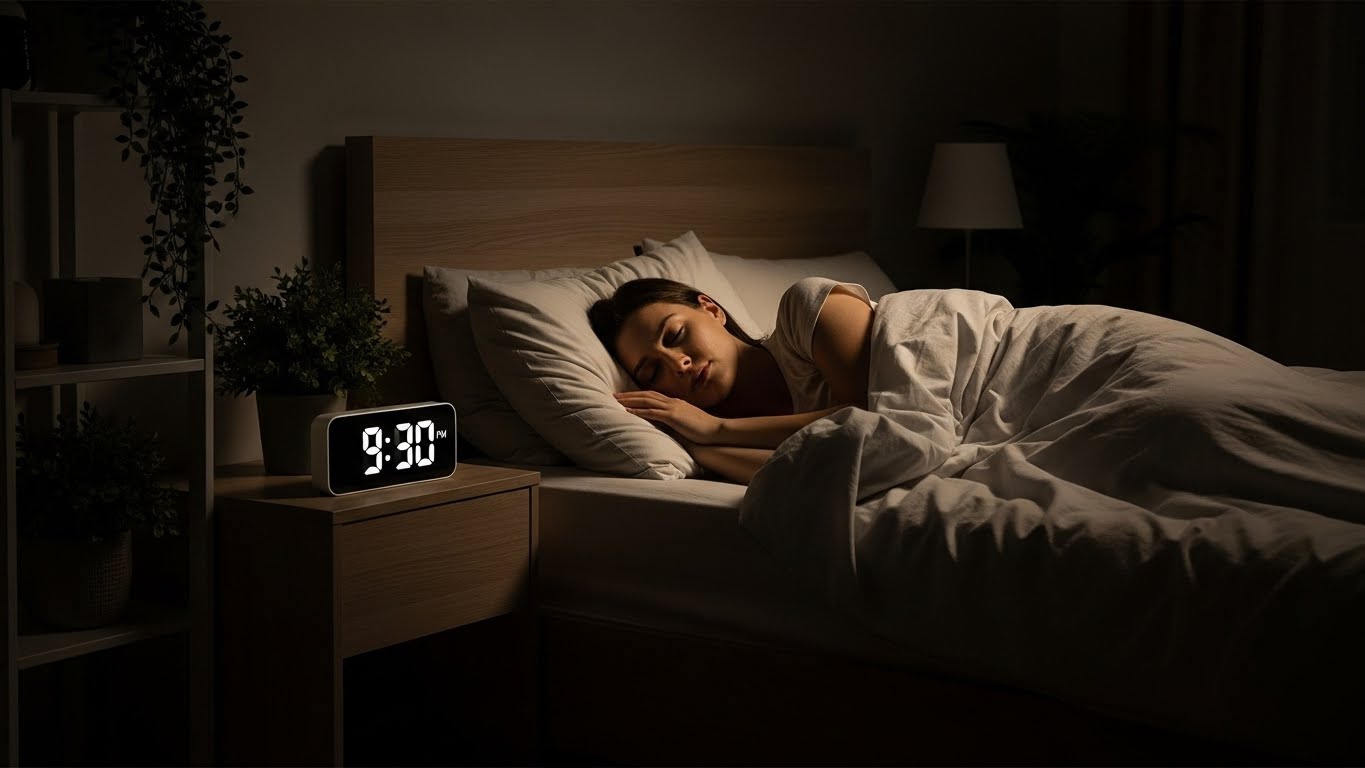
The Night: The Temperature Paradox
Here is where many make the mistake. Intuition tells us that if we are hot or stressed, cold water will “cool us down.” But biology is counterintuitive.
To enter a state of deep sleep, your body needs two prerequisites:
- Low cortisol levels (to allow melatonin to rise).
- A drop in Core Body Temperature.
If you shower with cold water at night, two problems occur:
1. The Cortisol Spike: By exposing yourself to the cold, you generate an artificial cortisol spike. Remember, cortisol is a wakefulness signal. By raising it, you antagonize melatonin, sending a signal to your brain that there is a “threat” or a need to be alert, delaying the onset of sleep.
2. The Rebound Effect (Thermogenesis): Although your skin feels cold when you get out of the shower, your body reacts to the cold by desperately trying to warm up to protect vital organs. This is called thermogenesis. Minutes after exiting the cold water, your core temperature may rise as a compensatory mechanism. Just when you need to cool down to sleep, your “internal oven” turns on.
The Night Solution: Warm Water
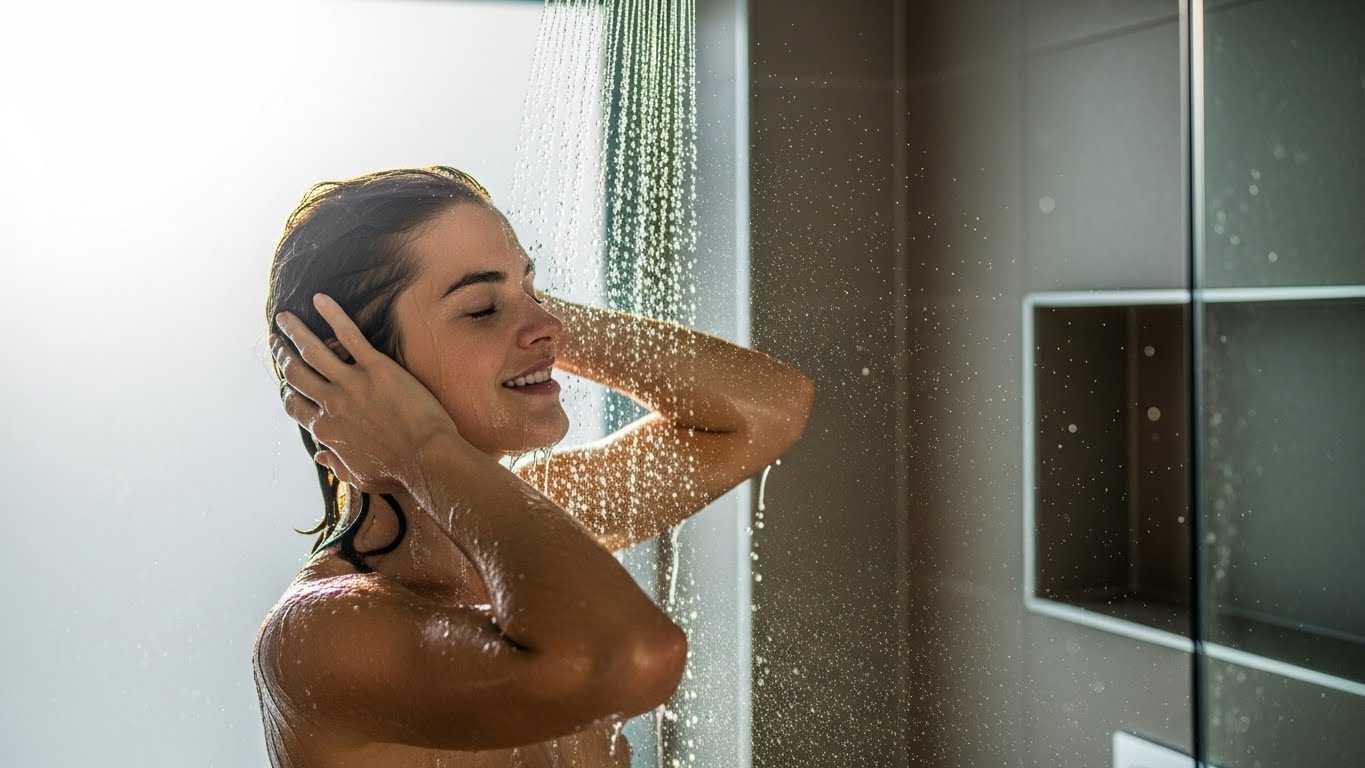
Science suggests that the best strategy for the night is warm or hot water.
This is due to a process called vasodilation. Hot water causes blood vessels to expand, bringing warm blood from your body’s core to the surface of the skin (which is why we turn red).
When you step out of a hot shower and into the cooler air of your bedroom, that heat on the skin dissipates rapidly into the environment. The net result is a rapid and efficient drop in core temperature. That thermal drop is, for your brain, a natural hypnotic and a biological signal that it is time to sleep.
The Ideal Protocol
To maximize your hormonal health and sleep quality, structure your showers like this:
- MORNING (Active Phase): Cold Water (1-3 minutes).
- Goal: Alertness, metabolism, dopamine, and synchronization of morning cortisol.
- NIGHT (Recovery Phase): Warm/Hot Water (5-10 minutes).
- Goal: Vasodilation, muscle relaxation, and core temperature drop for sleep induction.
Health isn’t just about doing “healthy” things; it’s about doing them at the right time.
Supporting Scientific Links and References
The information presented in this article is supported by the following research on thermal and endocrine physiology:
1. Hormonal Response to Cold Šrámek, P., et al. (2000). “Human physiological responses to immersion into water of different temperatures.” European Journal of Applied Physiology. This study demonstrates significant increases in norepinephrine (530%) and dopamine, as well as the acute stress response in immersions below 14°C. 🔗 URL: https://pubmed.ncbi.nlm.nih.gov/10825419/
2. Oxidative Stress and Hormonal Adaptation Leppäluoto, J., et al. (2008). “Endocrine effects of repeated sauna bathing and winter swimming.” International Journal of Circumpolar Health. Documents the acute increase of ACTH and cortisol following exposure to ice water as an energy mobilization mechanism. 🔗 URL: https://pubmed.ncbi.nlm.nih.gov/3818541/
3. Hydrotherapy and Nervous System (Review) Mooventhan, A., & Nivethitha, L. (2014). “Scientific evidence-based effects of hydrotherapy on various systems of the body.” North American Journal of Medical Sciences. Systematic review confirming the stimulation of the sympathetic nervous system and the increase in metabolic rate as a thermal defense against cold water. 🔗 URL: https://www.ncbi.nlm.nih.gov/pmc/articles/PMC4049052/
Medical Disclaimer: The information contained in this article by Caloritrack (a product of KAI STUDIOS, S.A.S.) is strictly educational and informational. While we encourage empowerment through knowledge, neither Caloritrack nor KAI STUDIOS, S.A.S. acts as a medical entity. This content does not substitute in any way the advice, diagnosis, or treatment of a qualified medical professional. Every body is unique; always consult your primary care doctor or specialist before making significant changes to your diet, routines, or lifestyle.